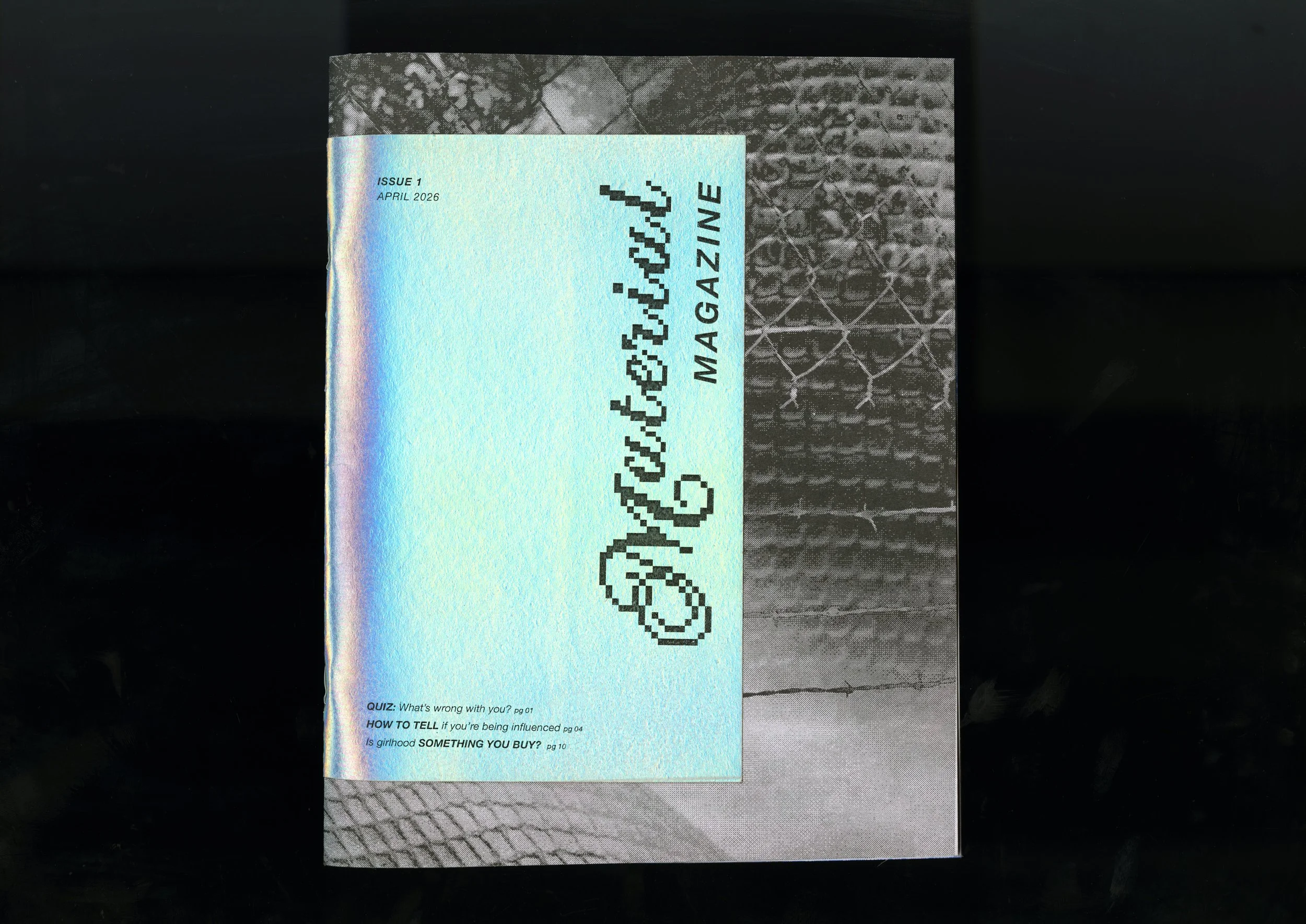
Material Magazine
A satirical teen magazine tackling the relationship between consumer culture and self-expression.
Scope: Publication Design
Industry: Entertainment
-
In contemporary culture, individual identity is often expressed through the products we consume.
This habit is exacerbated within social media communities, where curated photographs tie consumer choices to aesthetic microlabels. If you want to be a Clean Girl, you need a claw clip and a Rhode lip gloss. Wear a matching set from Lululemon, and you too can be a Pink Pilates Princess.
Material Magazine was addresses this phenomenon and promotes a healthier relationship with consumption.
-
For Issue 1 of Material Magazine, I narrow the focus to digital aesthetics and the marketing of girlhood.
My target audience for this subject is primarily Gen-Z women and femmes, but the magazine offers something for everyone to take away.
At its reception, I was delighted to find readers from different demographics laughing and crying along to my work.
-
The magazine employs a visual system inspired by teen magazines from the 1980s–2010s, typographic trends found on “aesthetic” blogs of the 2010s–2020s, and Susan Kare’s artwork for the first Macintosh computers.
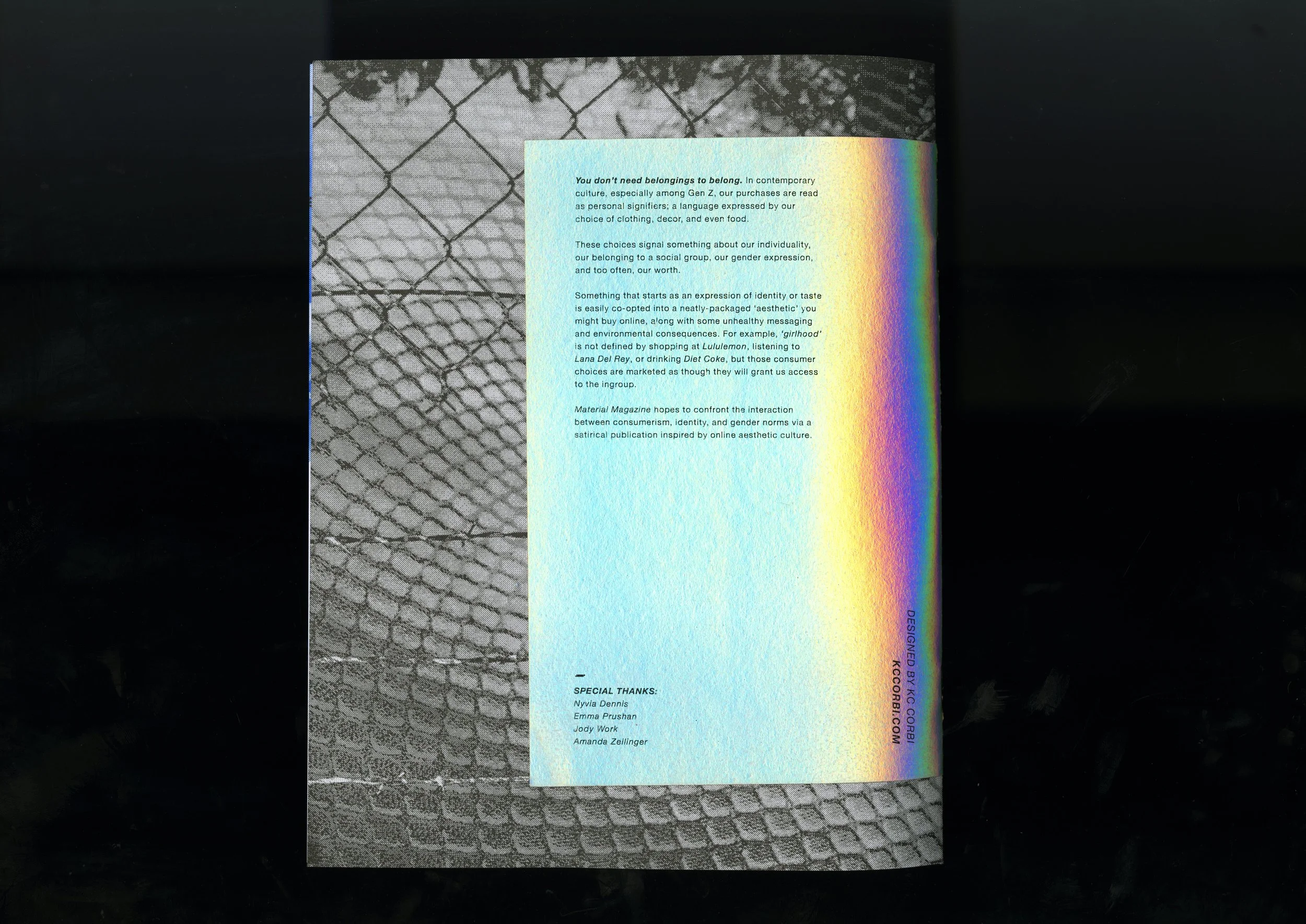
You don’t need belongings to belong.
In contemporary culture, especially among Gen Z, our purchases are read as personal signifiers; a language expressed by our choice of clothing, decor, and even food. These choices signal something about our individuality, our belonging to a social group, our gender expression, and too often, our worth.
Something that starts as an expression of identity or taste is easily co-opted into a neatly-packaged ‘aesthetic’ you might buy online, along with some unhealthy messaging and environmental consequences. For example, ‘girlhood’ is not defined by shopping at Lululemon, listening to Lana Del Rey, or drinking Diet Coke, but those consumer choices are marketed as though they will grant us access to the ingroup. This presents additional problems as the desired product becomes less accessible, such as the high price point of, say, the Lululemon Define Jacket, a coveted item in certain online spaces.
Material Magazine aims to confront the interaction between consumerism, identity, and gender norms via a satirical, teen-magazine-style publication system.
-
![]()
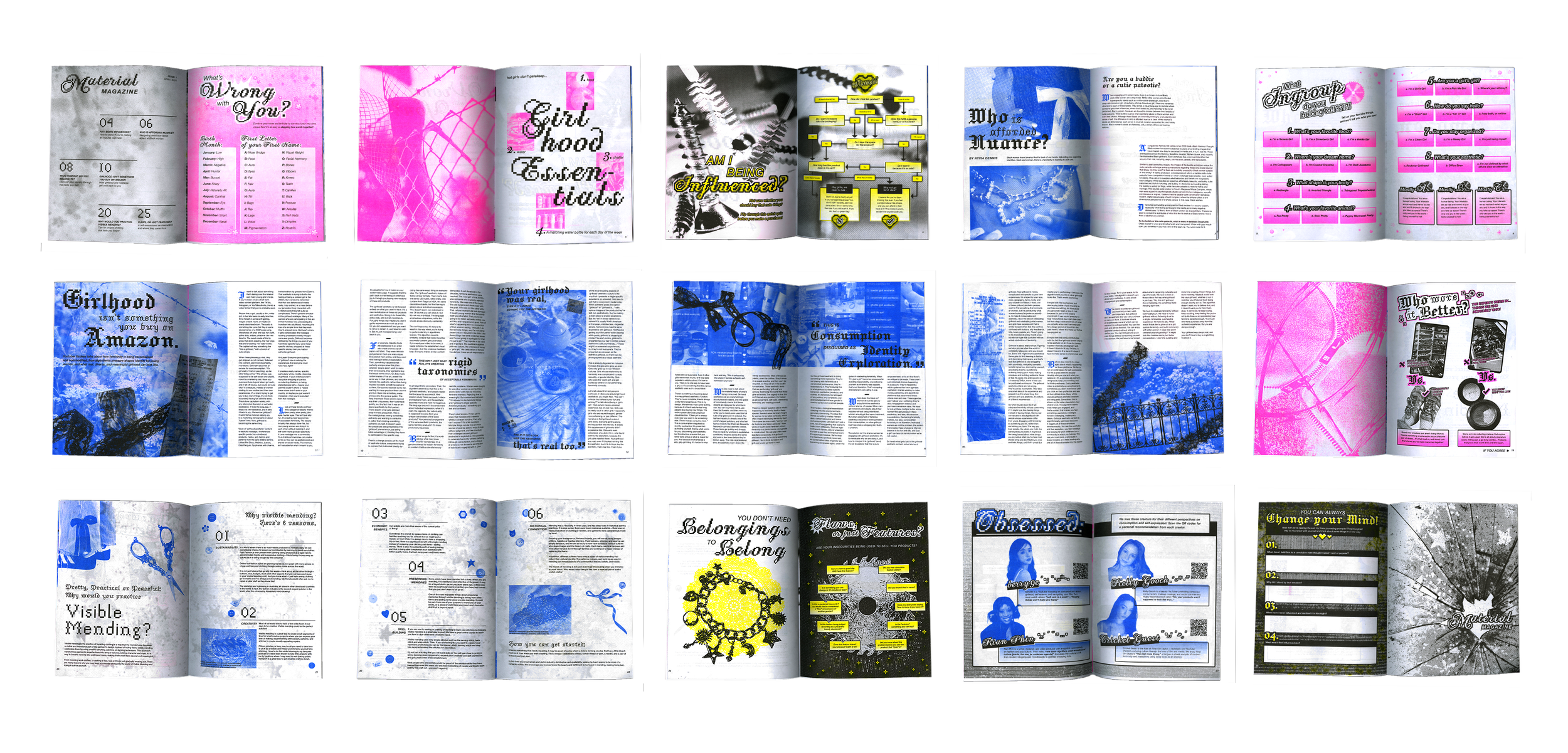
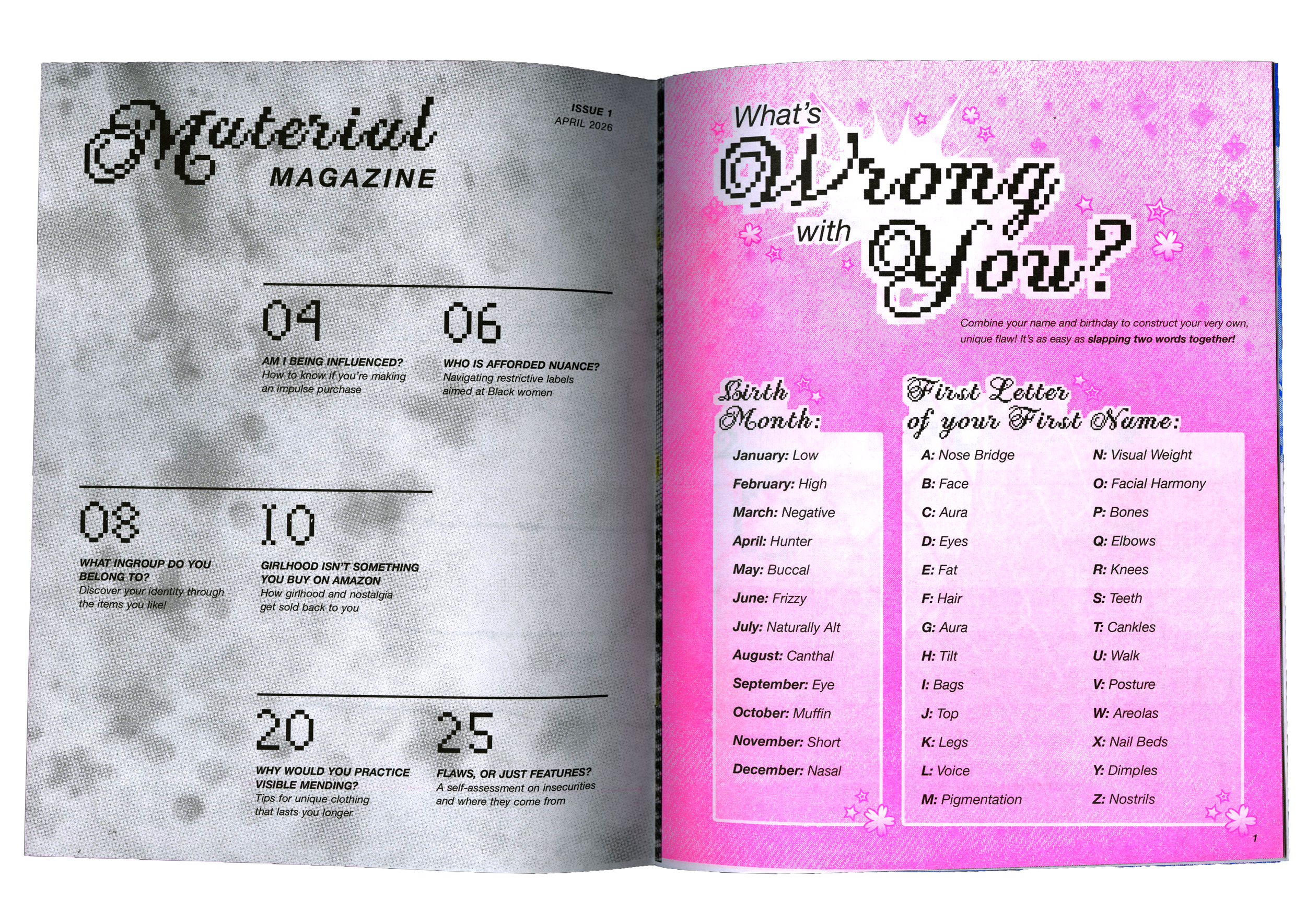
What’s Wrong with You? A spin on an internet game that generates a name based on information about the player. I reference real appearance-based buzzwords (e.g. hunter eyes, low facial harmony) found on sites like TikTok. Recontextualizing them in this format emphasizes the seemingly randomly-generated nature of these terms.
-
![]()
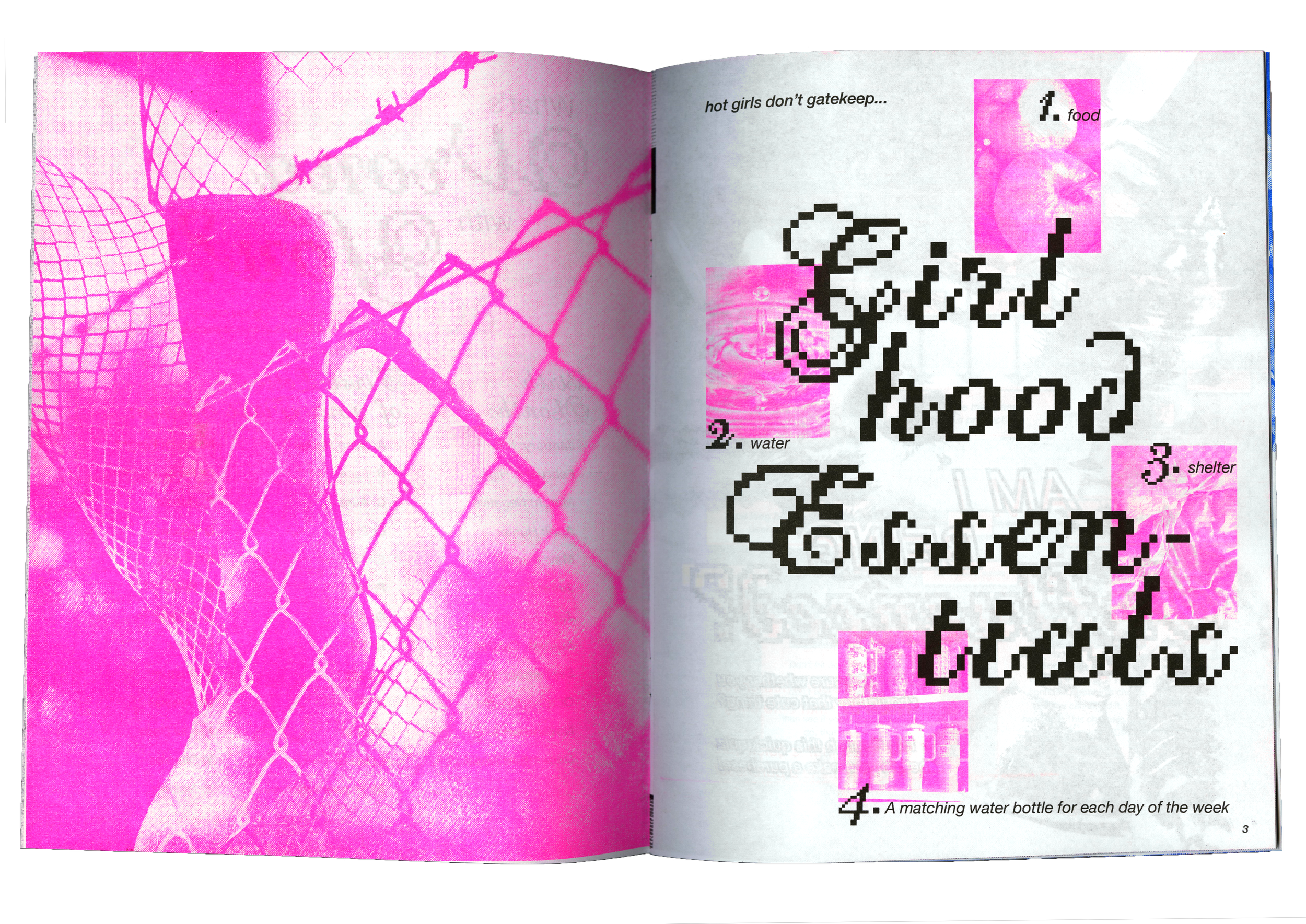
Girlhood Essentials A play on how hyperconsumerism (the consumption of goods beyond one's necessities) is perpetuated by marketing non-essential items as “essentials.”
-
![]()
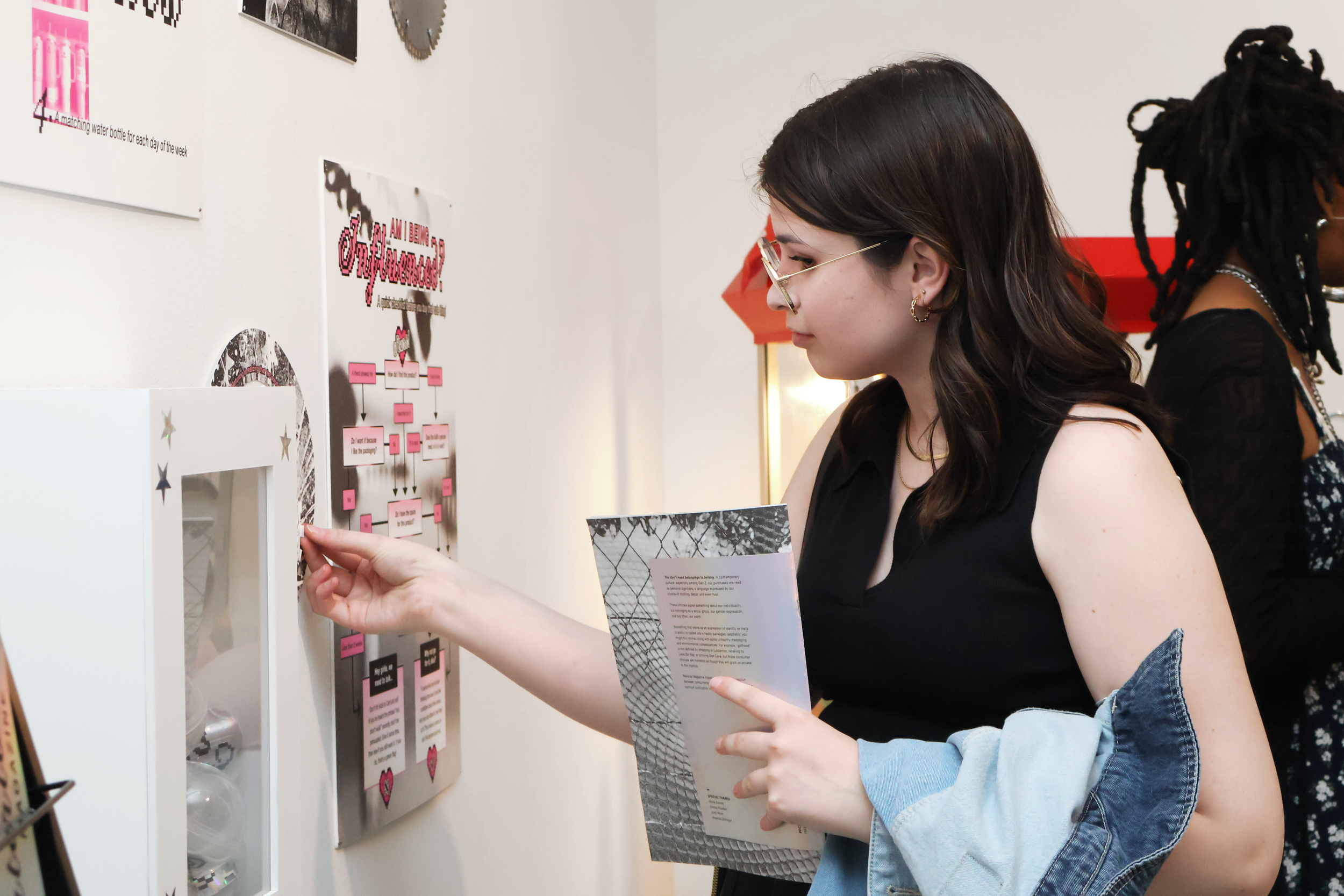
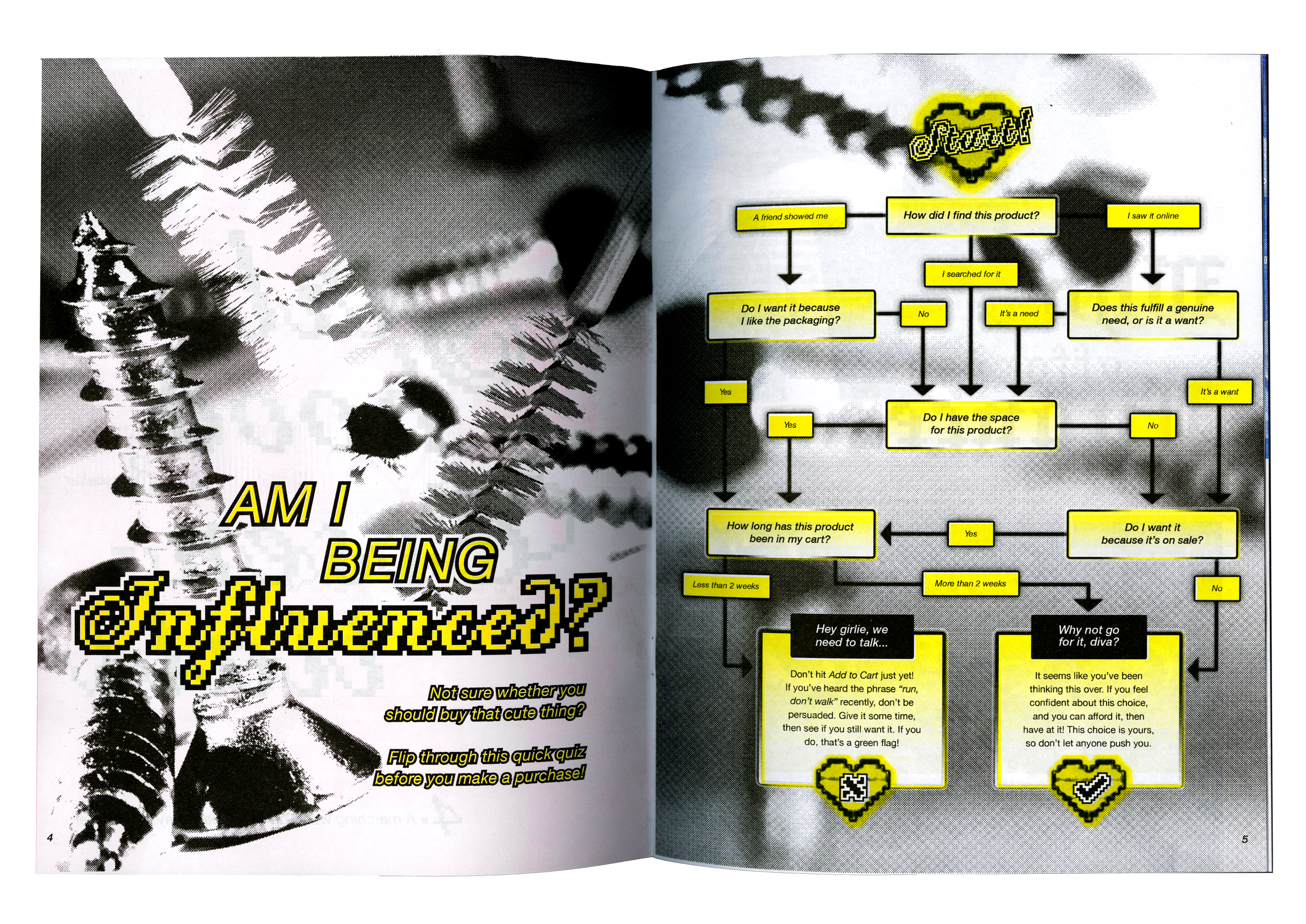
Am I Being Influenced? Inspired by personality quizzes in teen magazines, this quiz is designed to encourage more mindful consumption habits.
-
![]()
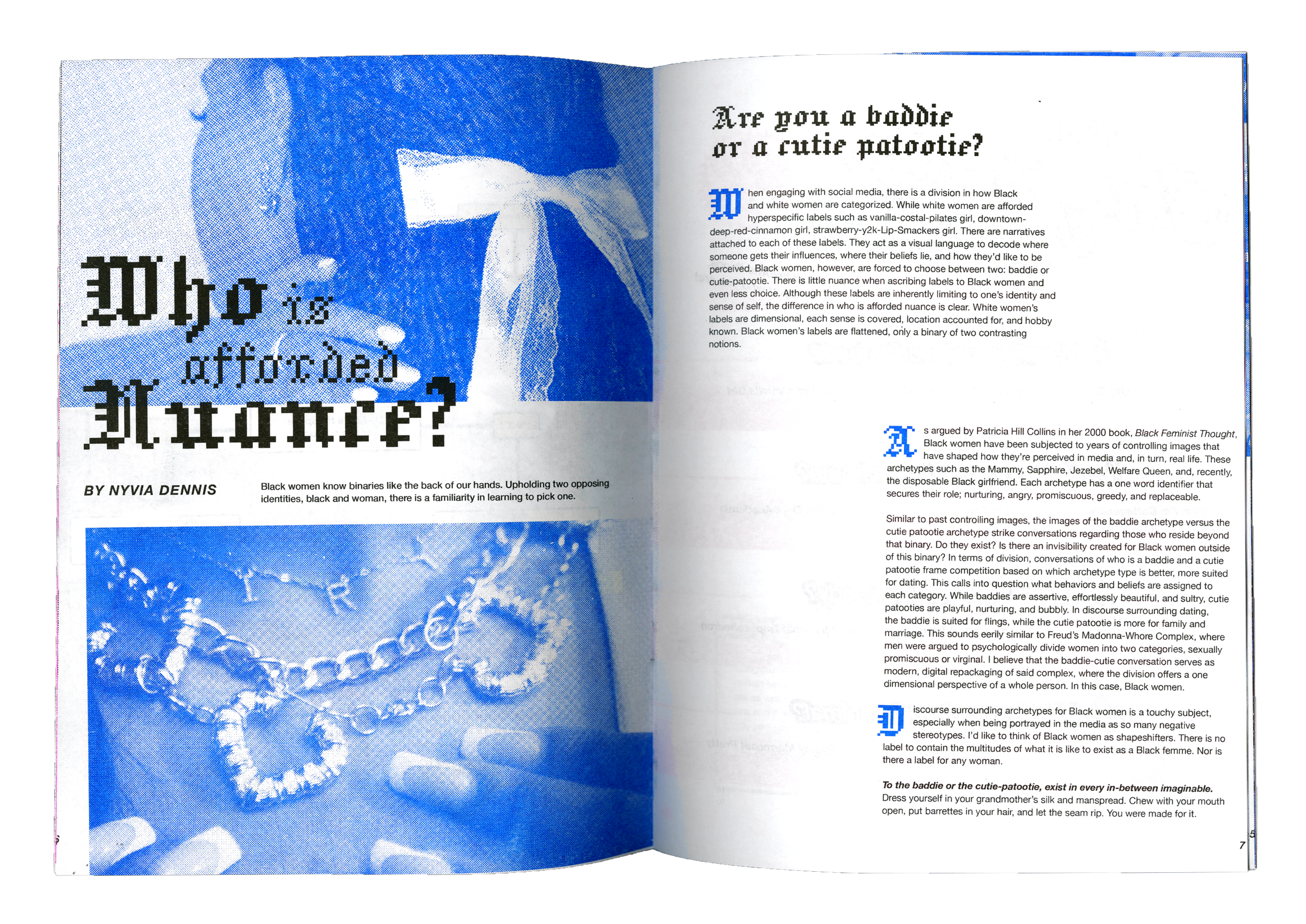
Who Is Afforded Nuance? Written by Nyvia Dennis, this article dissects a limiting binary attached to Black women on social media: the baddie or the cutie-patootie. Dennis traces this modern binary to historical archetypes used against Black women, as well as Freud’s Madonna-Whore Complex.
-
![]()
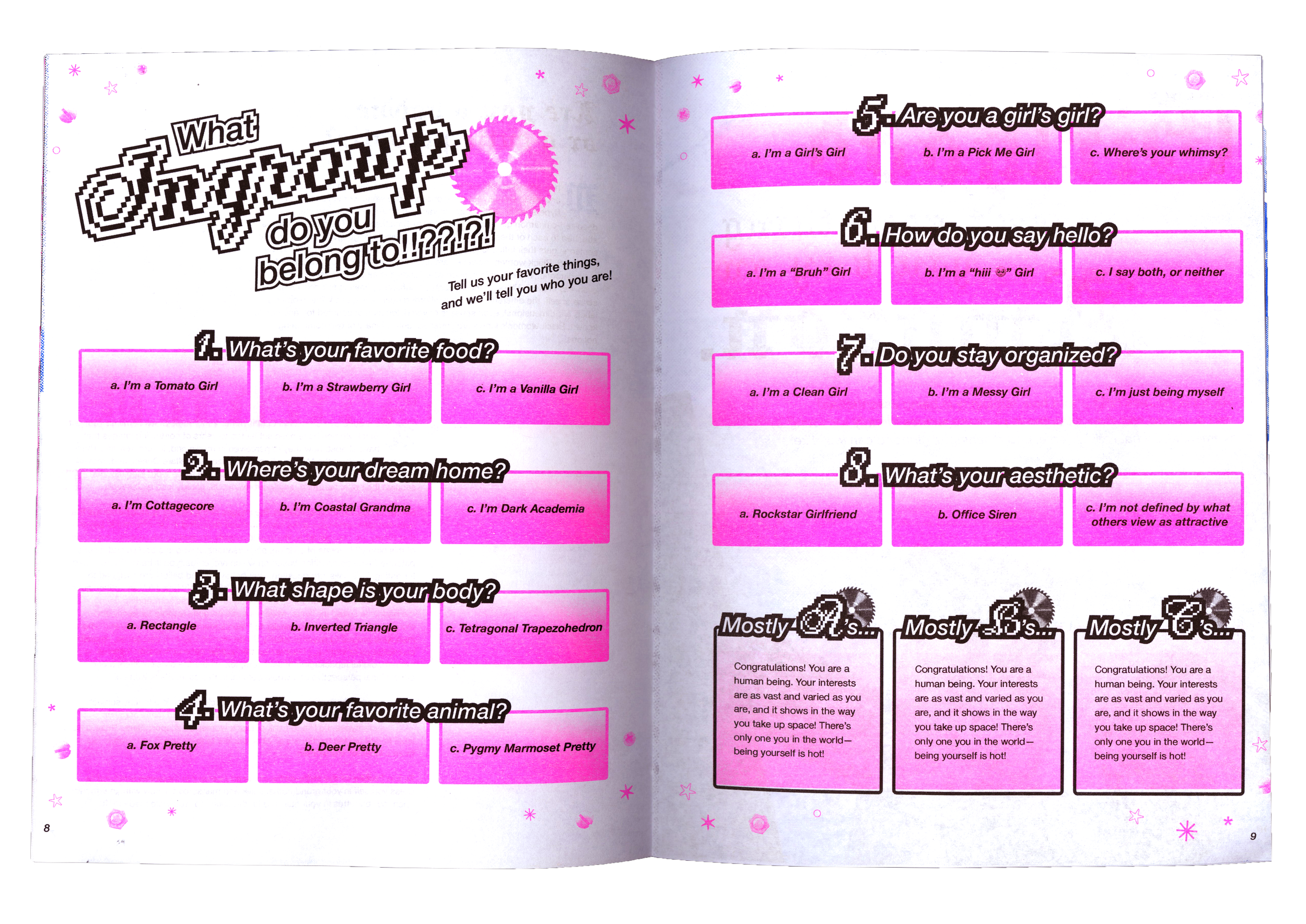
What Ingroup Do You Belong To? Another spin on the teen magazine’s personality quizzes, this parody forces the player into a set of hyper-specific labels. Referencing real categorical terms from social media (e.g. vanilla girl, costal grandma, fox pretty), the quiz becomes increasingly disruptive before rejecting labels altogether; each result the same, “Congratulations! You are a human being.”
-
![]()
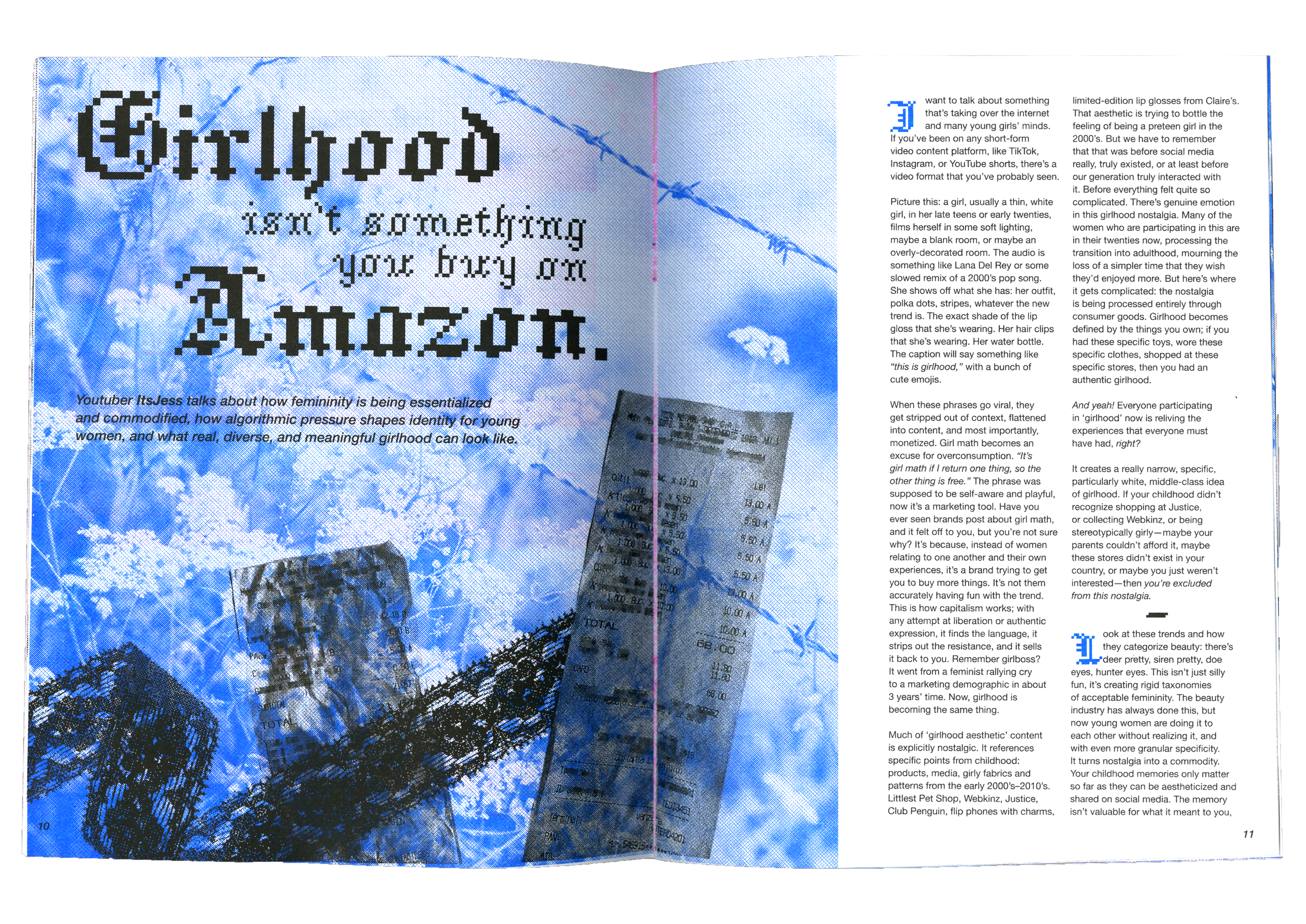
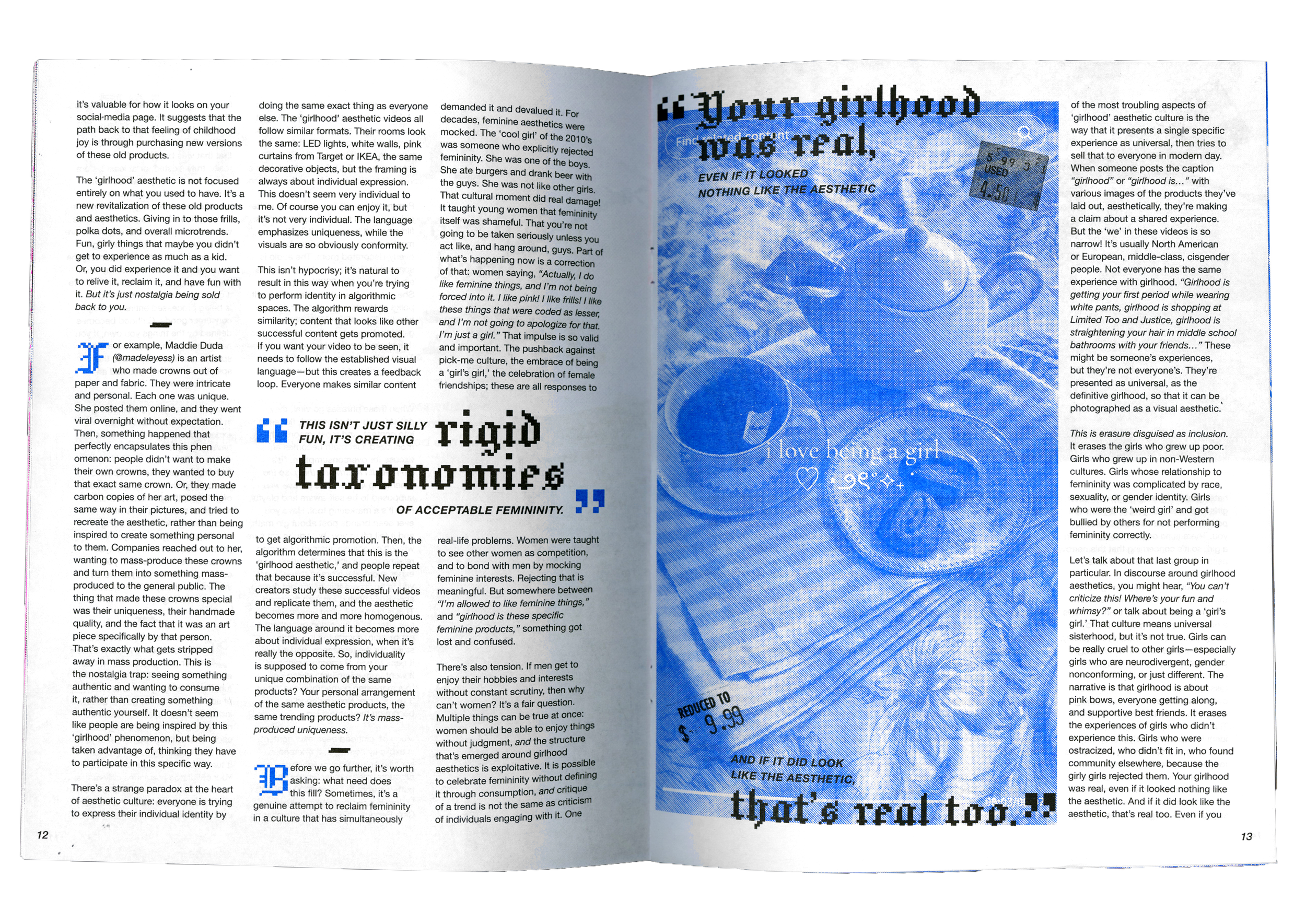
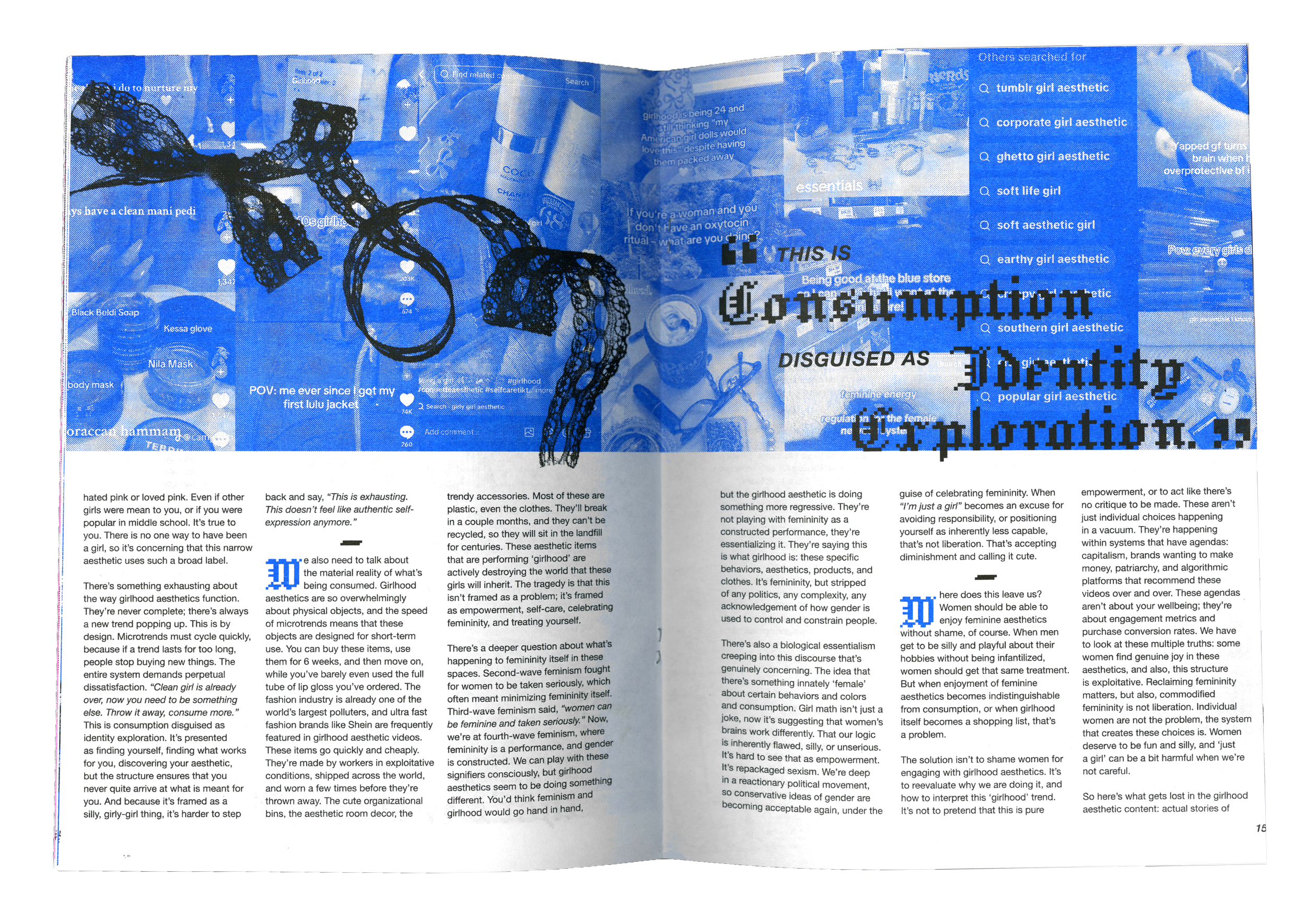
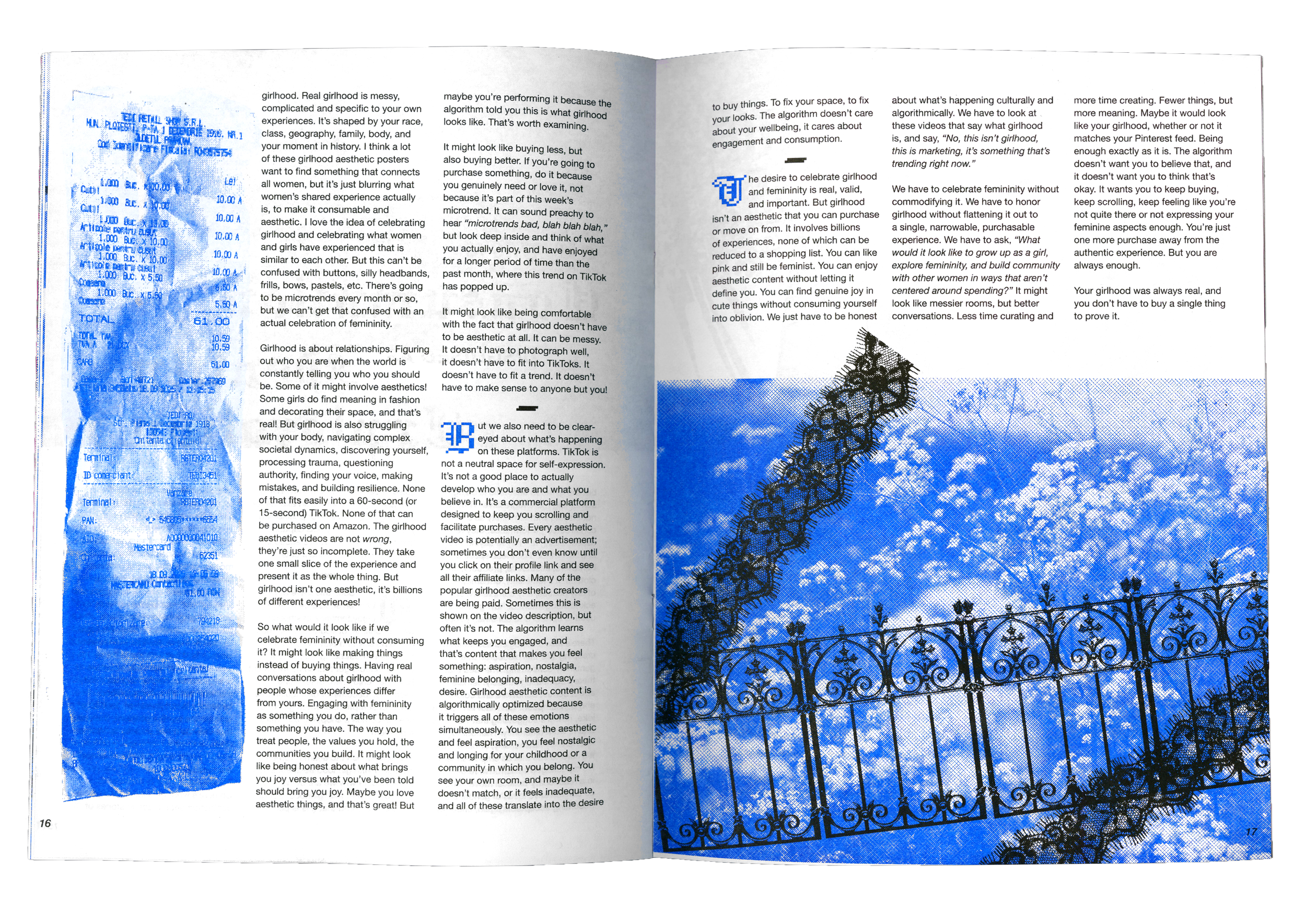
Girlhood isn’t something you buy on Amazon. An abridged transcript of ItsJess’s video essay, this passage highlights how femininity is essentialized and commodified, how algorithmic pressure shapes identity for young women, and what real, diverse, and meaningful girlhood can look like.
-
![]()
Girlhood isn’t something you buy on Amazon. An abridged transcript of ItsJess’s video essay, this passage highlights how femininity is essentialized and commodified, how algorithmic pressure shapes identity for young women, and what real, diverse, and meaningful girlhood can look like.
-
![]()
Girlhood isn’t something you buy on Amazon. An abridged transcript of ItsJess’s video essay, this passage highlights how femininity is essentialized and commodified, how algorithmic pressure shapes identity for young women, and what real, diverse, and meaningful girlhood can look like.
-
![]()
Girlhood isn’t something you buy on Amazon. An abridged transcript of ItsJess’s video essay, this passage highlights how femininity is essentialized and commodified, how algorithmic pressure shapes identity for young women, and what real, diverse, and meaningful girlhood can look like.
-
![]()
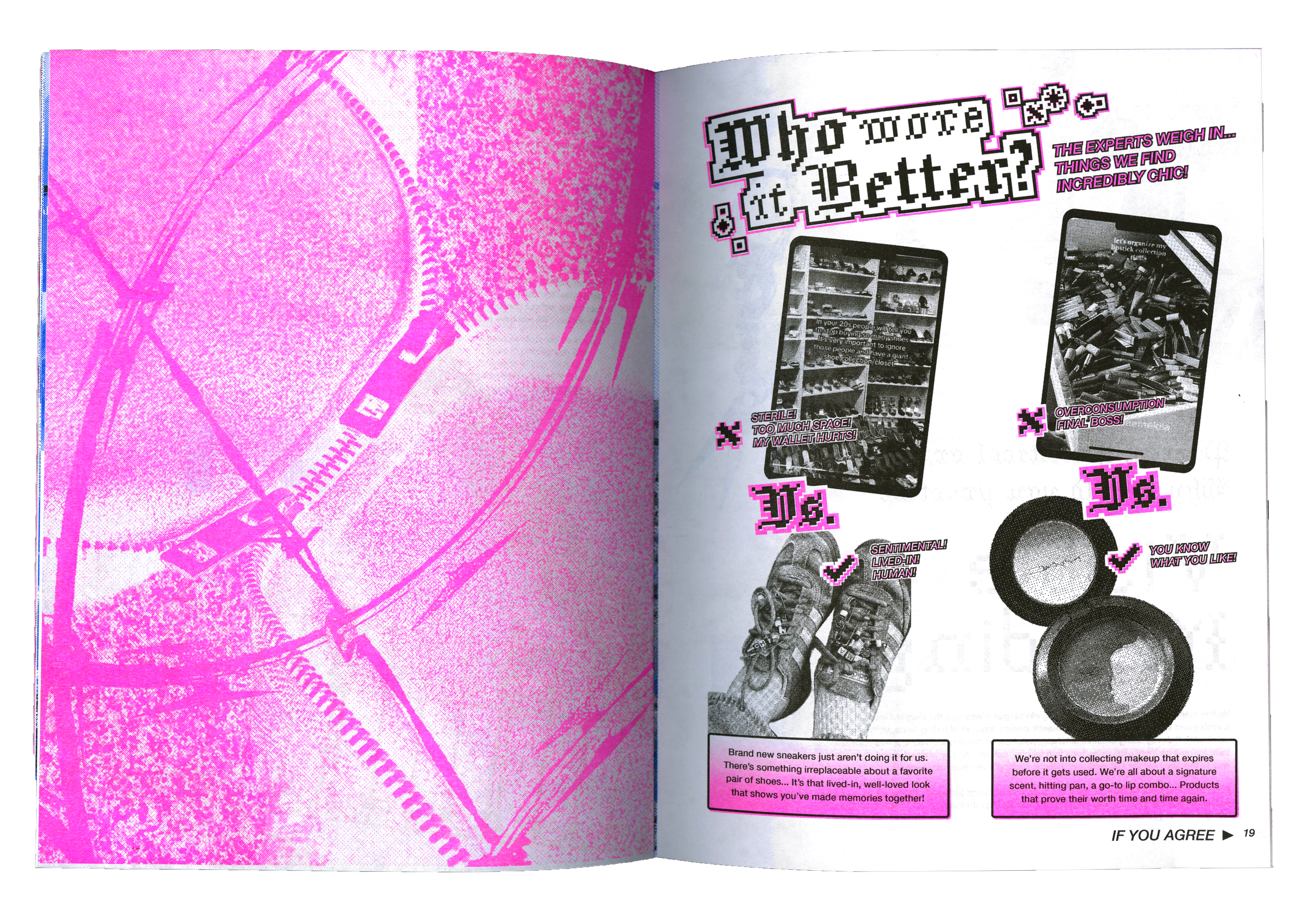
Who Wore It Better? A spin on a classic; except, instead of pitting women’s bodies against each other, this spread contrasts sentimental value against the excessive purchasing of new goods.
-
![]()
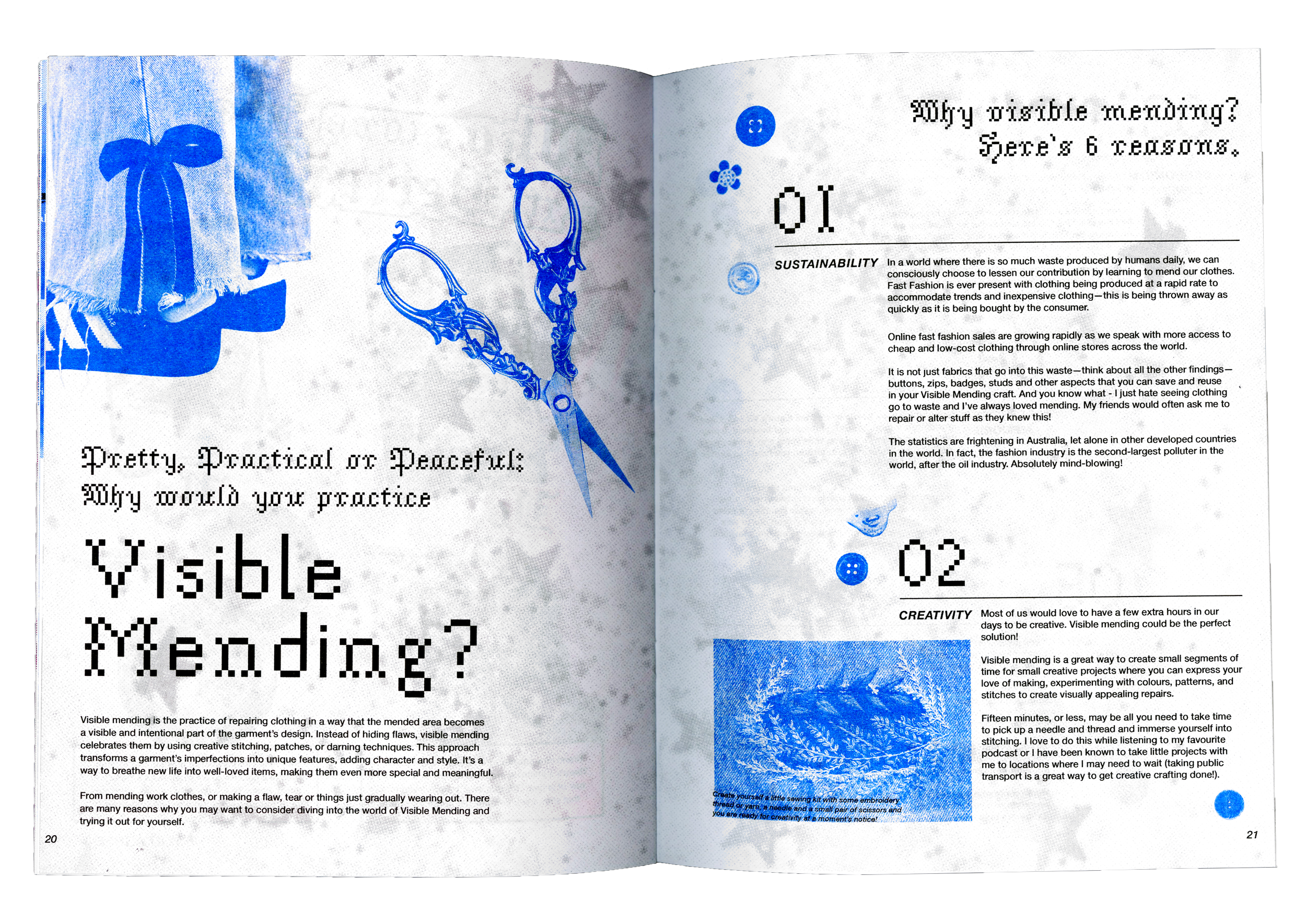
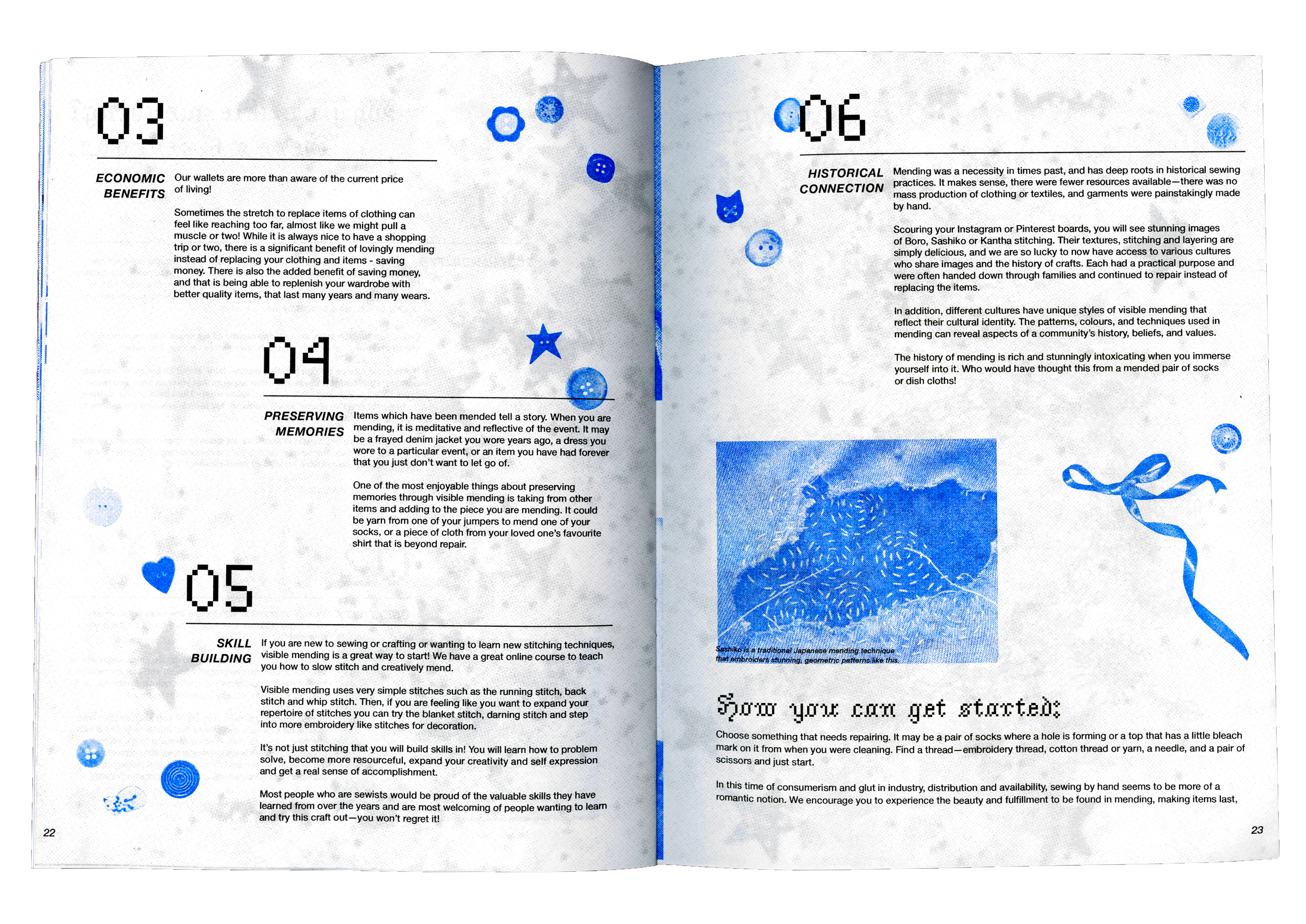
Pretty, Practical or Peaceful: Why would you practice visible mending? Written by Ruth Woods, this article explores the many reasons to repair clothing instead of replacing it.
-
![]()
Pretty, Practical or Peaceful: Why would you practice visible mending? Written by Ruth Woods, this article explores the many reasons to repair clothing instead of replacing it.
-
![]()
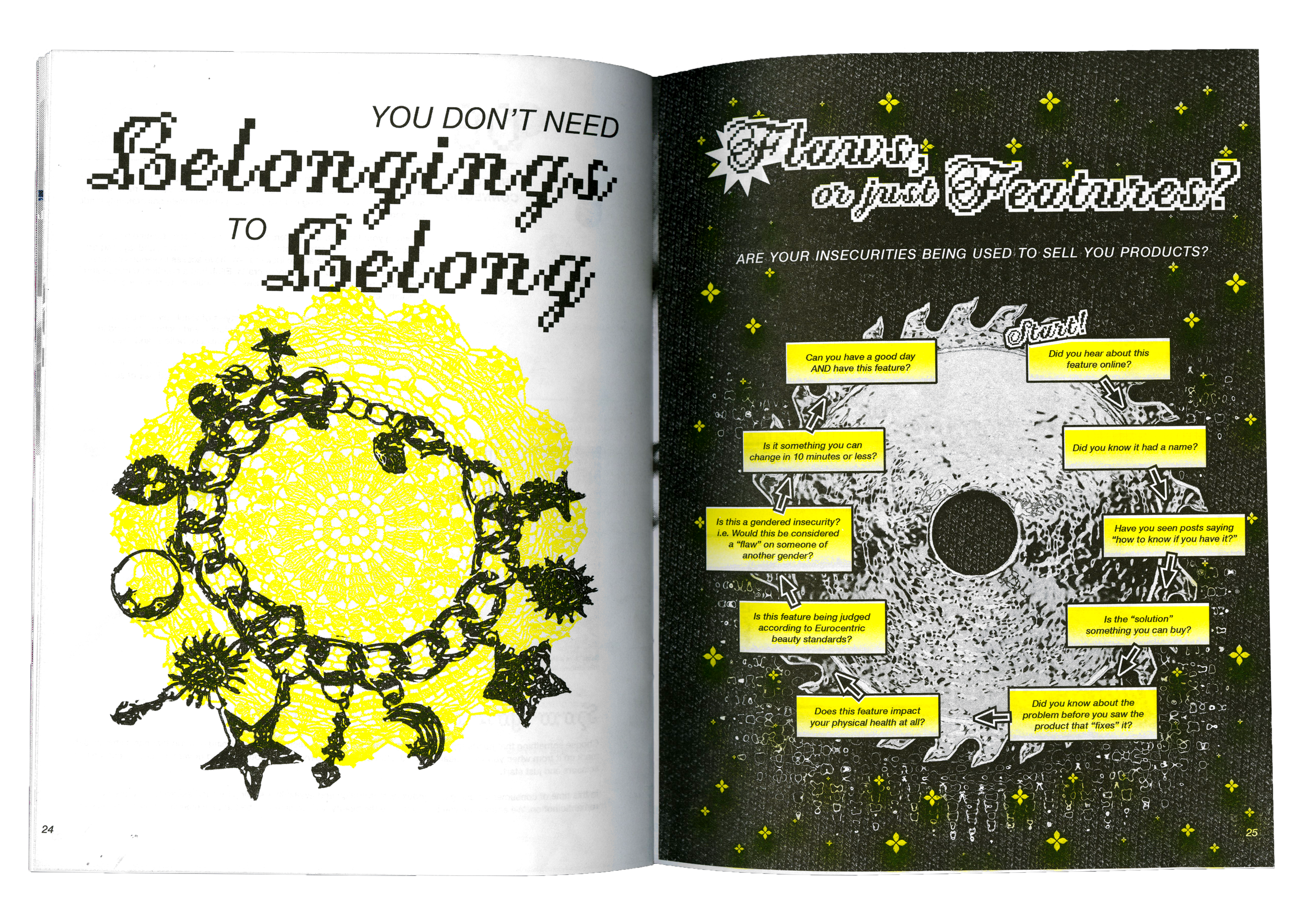
Flaws, or Just Features? This quiz invites the player to examine their insecurities down to the source, offering a new perspective where the insecurity may have otherwise been leveraged to sell products.
-
![]()
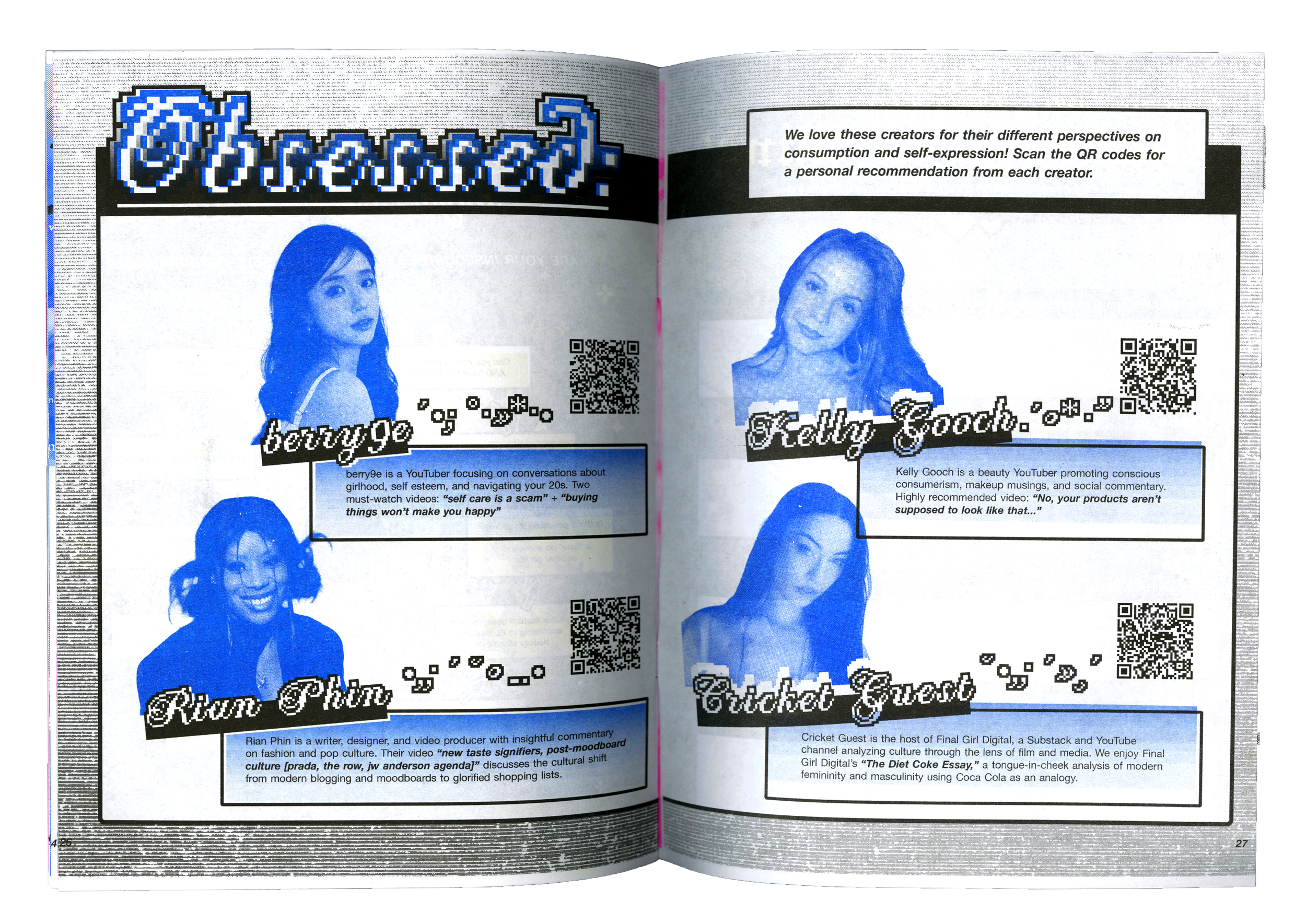
Obsessed One publication is just the starting point. This spread highlights other creators who influenced or inspired Material Magazine, inviting the reader to explore deeper.
-
![]()
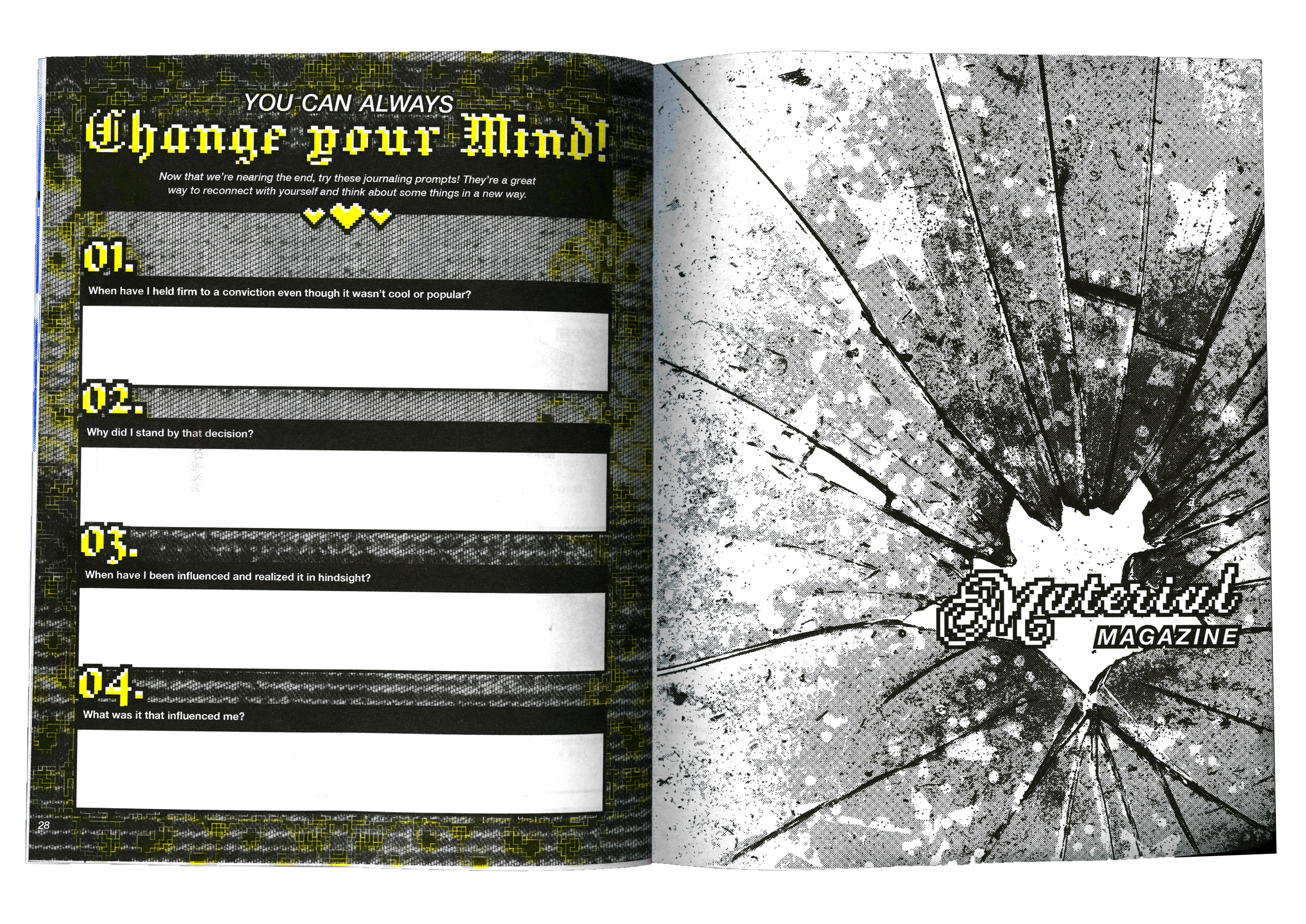
You Can Always Change Your Mind! Material Magazine closes with a set of journaling prompts, to take the conversation beyond the magazine.
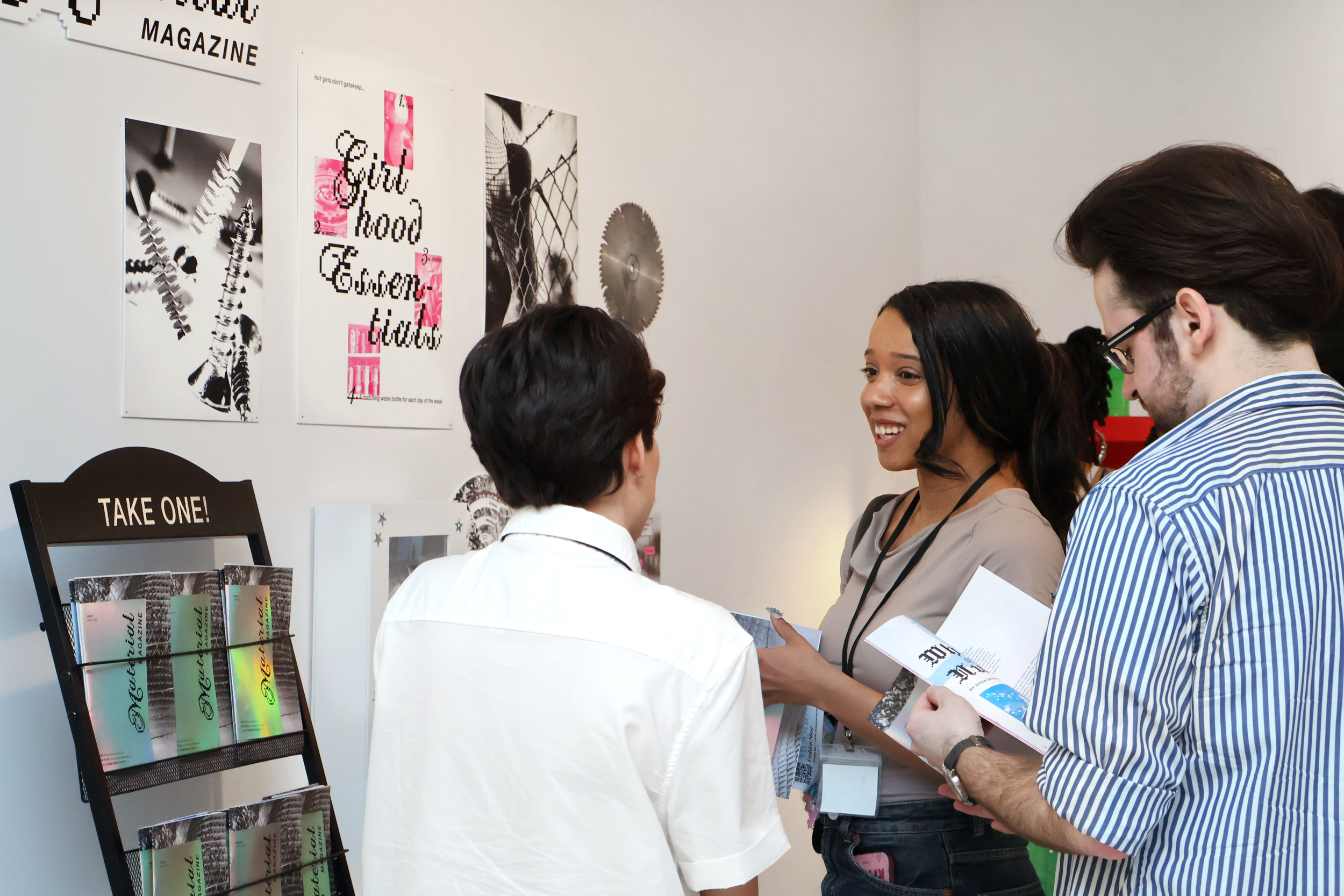
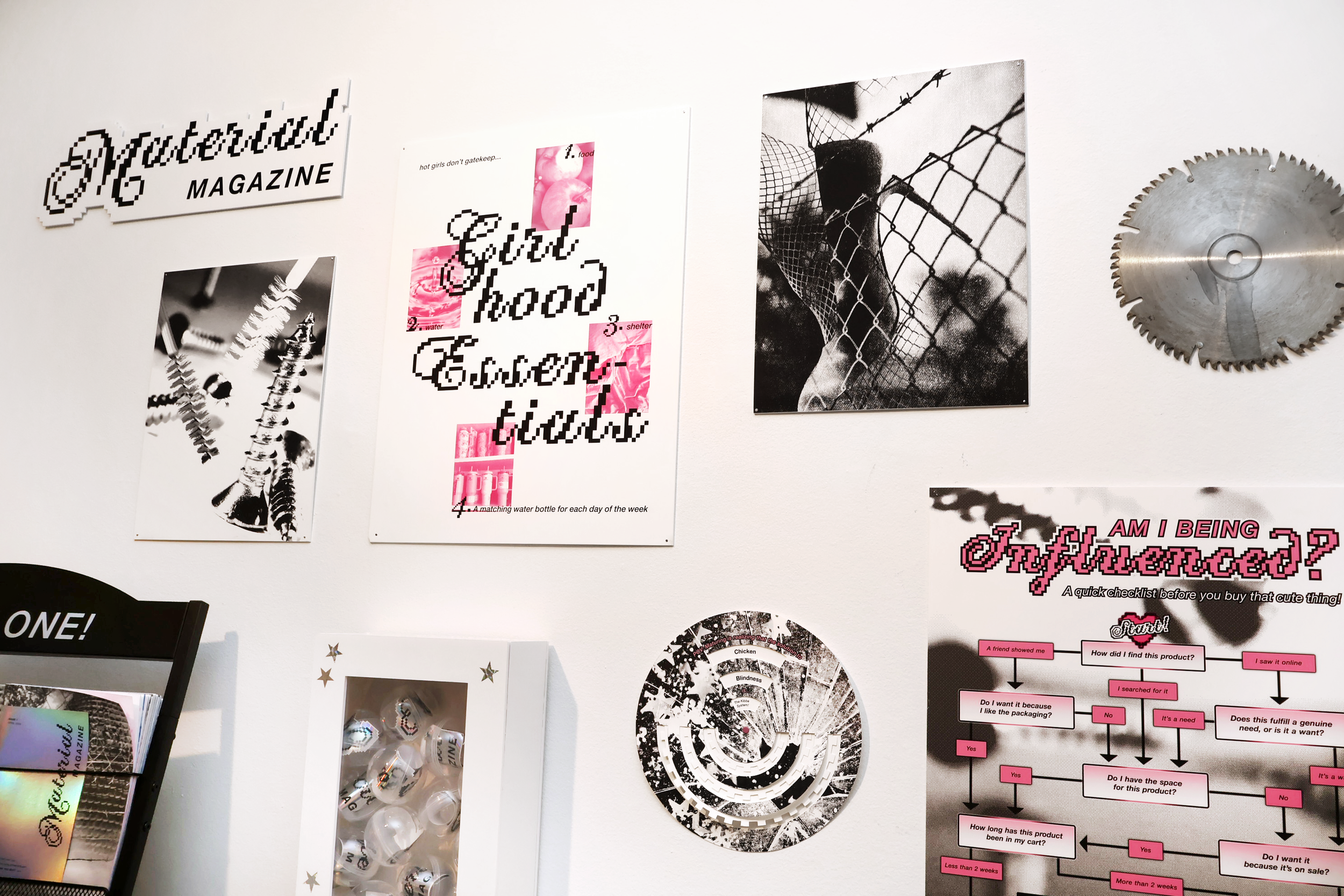
The Exhibition.
Creating a home for Material Magazine, I knew
-
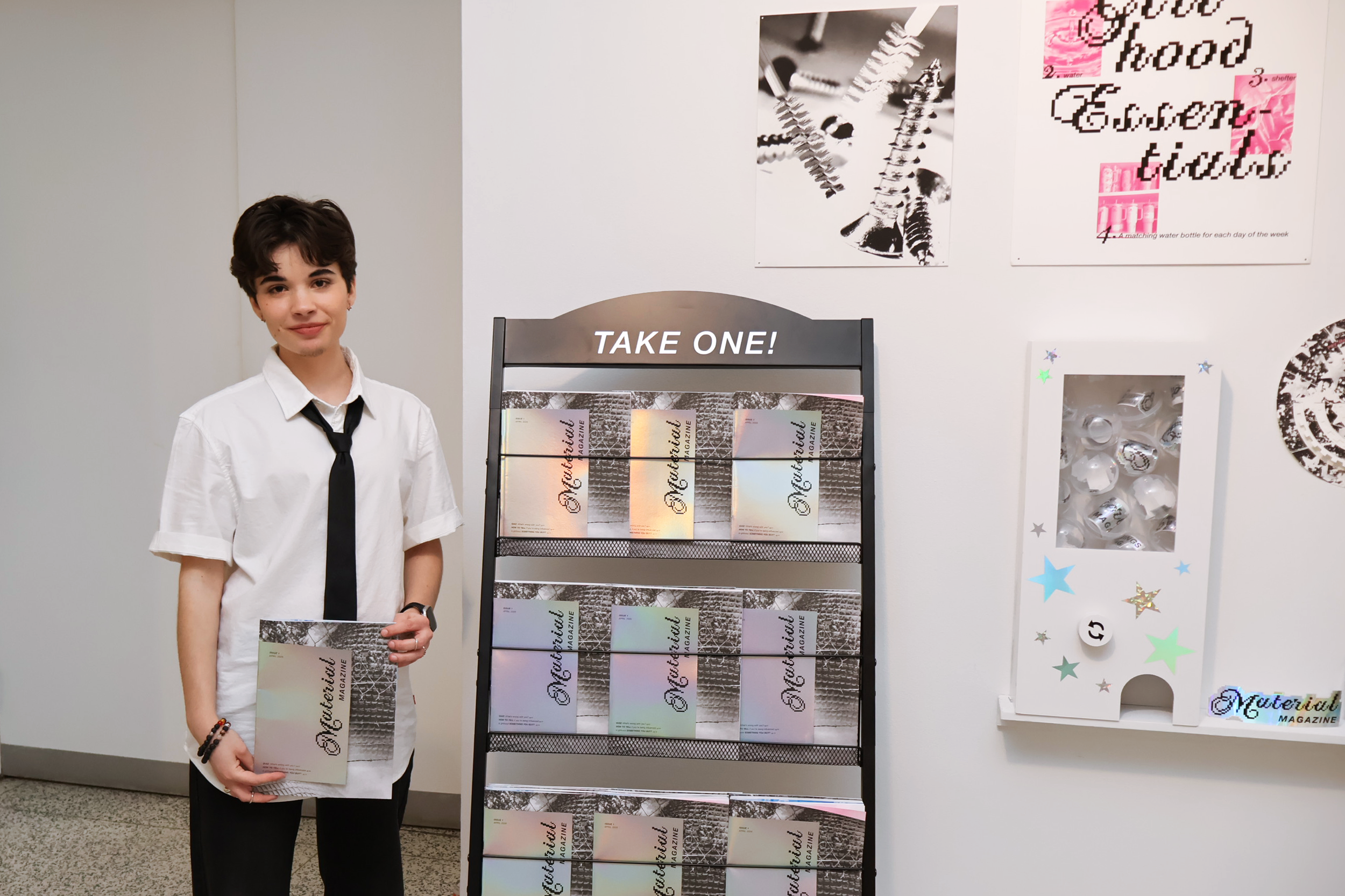
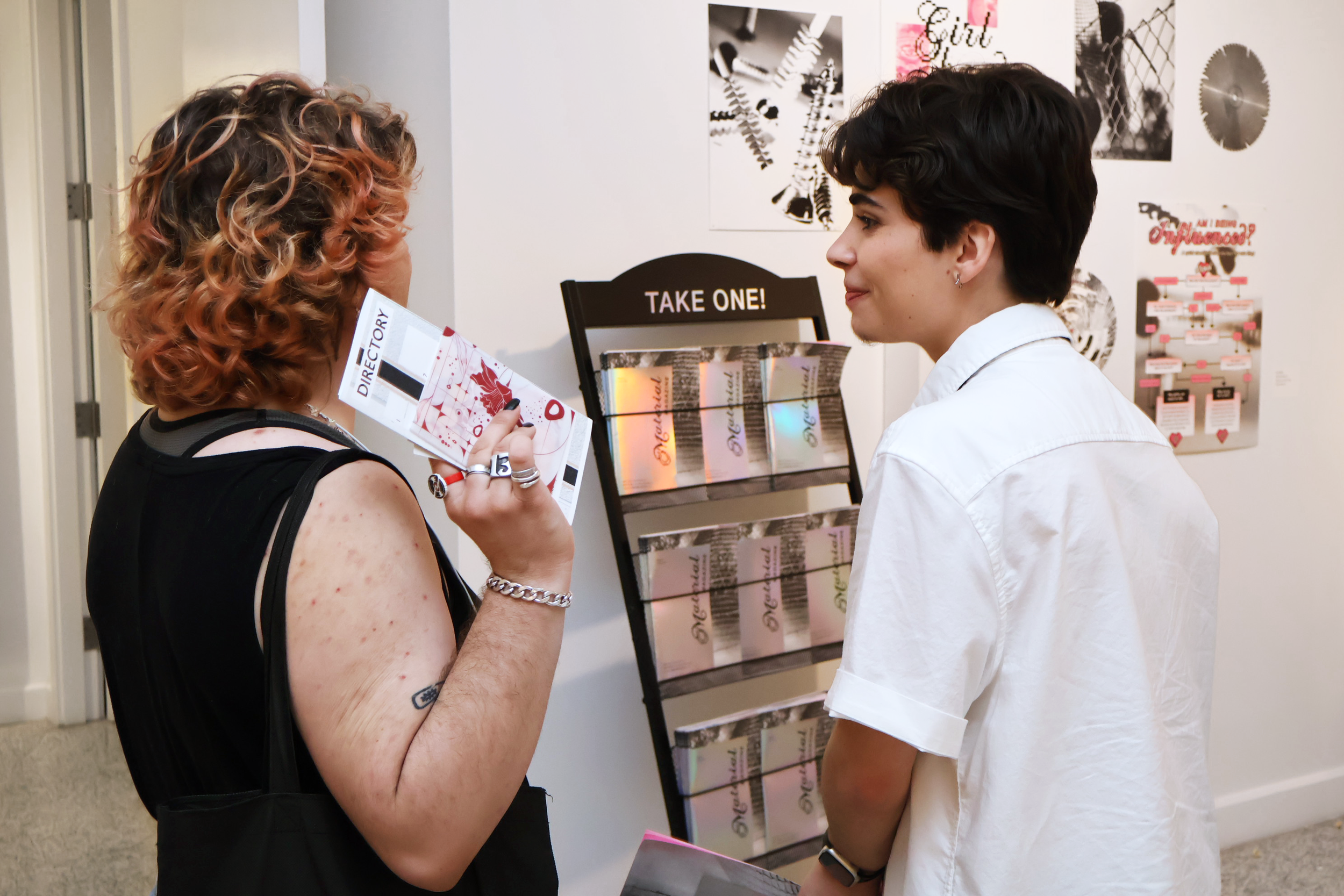
The nature of this project demands the accessibility of information over profit. Putting the publication front and center, guests were invited to take their own copy of Material Magazine at no cost.
I’m delighted to add that by day 2 of the show, all copies had been taken! -
To catch the eye and communicate my message more quickly, I adapted key spreads into poster format.
To enhance the conversational aspect of Material Magazine, I added an interactive poster: the volvelle. A set of 3 rotating disks allowed guests to mix-and-match digital buzzwords used to market to insecurities. -
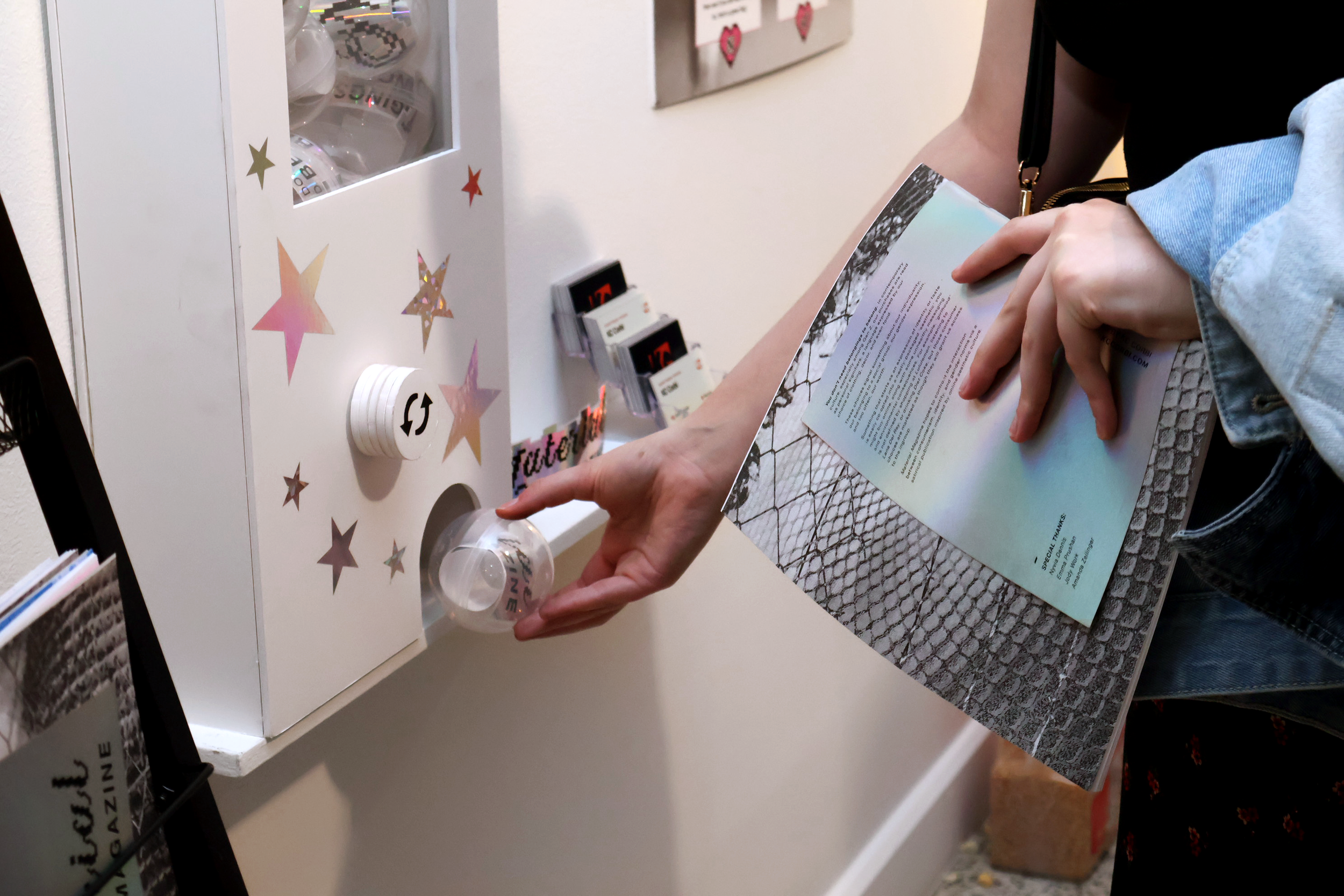
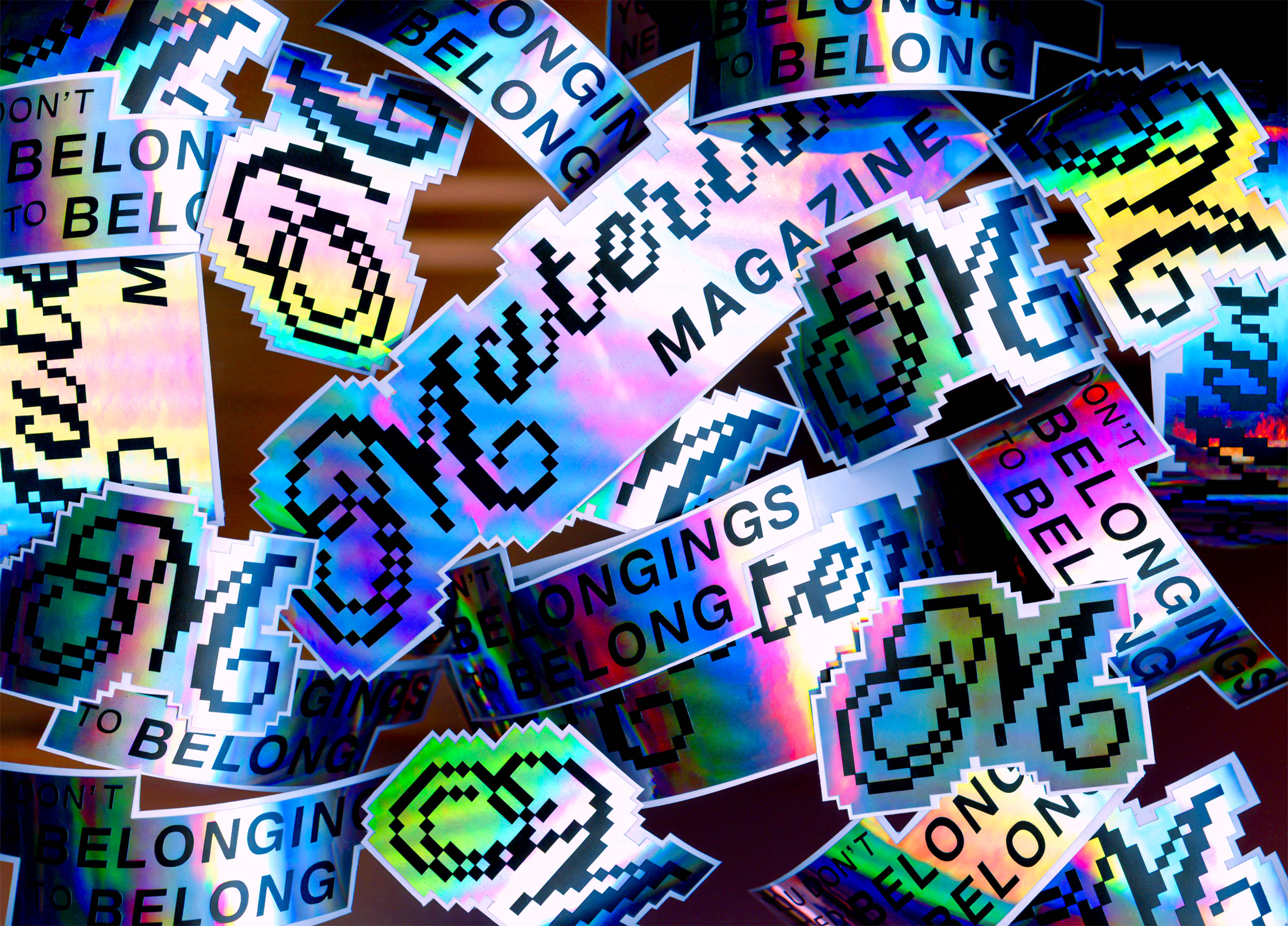
A project about consumerism needs stuff. To gamify the experience, and give guests something extra to take home, I created a capsule machine filled with stickers using CNC machinery.
With holographic vinyl to match the magazine cover, the sticker designs included variations on the logo, as well as the tagline, “You don’t need belongings to belong.”